
Most people understand the value of regular maintenance when it comes to their cars, homes, and appliances. They change the oil in their vehicles, replace HVAC filters, clean gutters, and service plumbing systems because they know small preventive tasks can prevent expensive failures. Electrical systems deserve the same attention. Yet electrical maintenance is often overlooked until a circuit fails, equipment stops working, or a serious safety hazard develops.
The truth is simple: electrical maintenance is almost always cheaper than repairing or replacing equipment damaged by neglect. Items that can be damaged include plumbing and HVAC equipment, major appliances, computers, electronics, TVs, smart devices, light fixtures and just about anything that is plugged in because power is supplied to the outlets by the electrical panel.
Consider a car. Regular oil changes, tire rotations, brake inspections, and fluid checks cost relatively little compared with replacing an engine or transmission. If a driver ignores warning signs, a minor issue can quickly become a major breakdown. Preventive maintenance protects the vehicle’s performance, improves fuel efficiency, and extends its useful life.
HVAC systems work in much the same way. Replacing filters, cleaning coils, checking refrigerant levels, and inspecting electrical connections help an air conditioner or furnace operate efficiently. Without routine maintenance, the system may work harder, consume more energy, and eventually suffer a compressor or motor failure. A simple service visit is far less expensive than replacing an entire HVAC system.
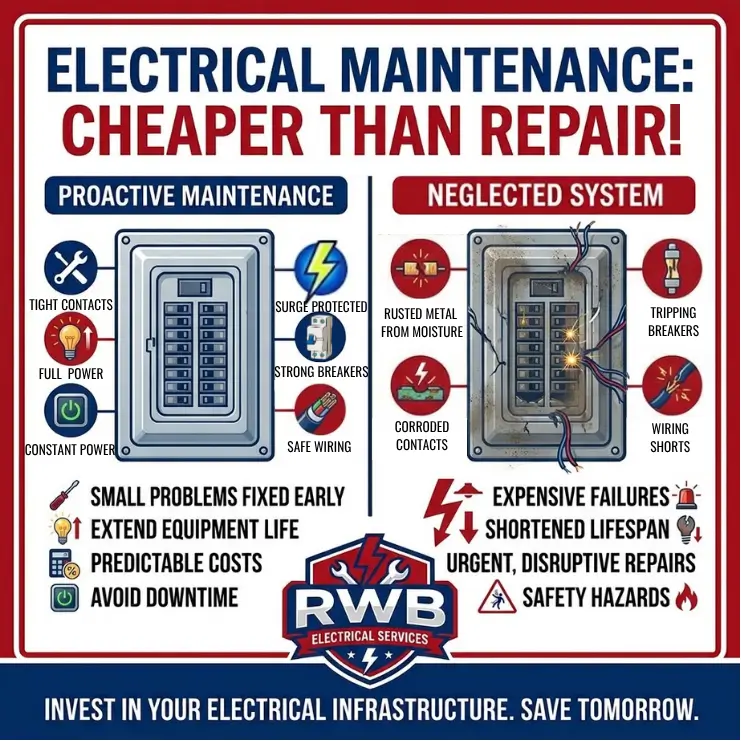
Electrical systems also contain components that gradually wear out or become unsafe. Wiring can loosen, insulation can deteriorate, circuit breakers can weaken, and outlets may become damaged. Dust, moisture, heat, corrosion, and overloading can place additional stress on electrical equipment. Regular inspections can identify these problems before they cause power interruptions, equipment damage, electrical fires, or injuries.
Electrical maintenance may include testing circuit breakers, tightening connections, inspecting panels, checking grounding systems, examining outlets and switches, and looking for signs of overheating. In commercial and industrial settings, it can also involve infrared inspections, generator testing, motor maintenance, and emergency lighting checks. These services help ensure that electrical systems remain safe, reliable, and compliant with applicable standards.
Neglect can be especially costly for businesses. An unexpected electrical failure may stop production, interrupt computer systems, damage inventory, and force employees to work around unsafe conditions. The resulting expenses can include emergency service charges, lost productivity, equipment replacement, and reputational damage. In contrast, scheduled maintenance can often be planned during convenient hours and included in an organization’s regular budget.
There is also an important difference between maintenance and emergency repair. Maintenance is controlled and predictable. Repairs are often urgent, disruptive, and more expensive because technicians must diagnose a failure under pressure and may need to source replacement parts quickly. If damaged equipment cannot be repaired, full replacement may be the only option. In many cases, neglect shortens the lifespan of otherwise valuable electrical components.
Preventive electrical maintenance is not an unnecessary expense; it is an investment. Just as regular vehicle servicing protects an engine and HVAC maintenance protects a heating and cooling system, electrical maintenance protects a building’s power infrastructure, equipment, occupants, and operations.
By scheduling professional inspections and addressing small problems early, property owners can reduce equipment failure, avoid unexpected downtime, improve safety, and extend the life of their electrical systems. The choice is clear: paying for maintenance today is far more affordable than paying for repairs—or complete replacement—tomorrow.