
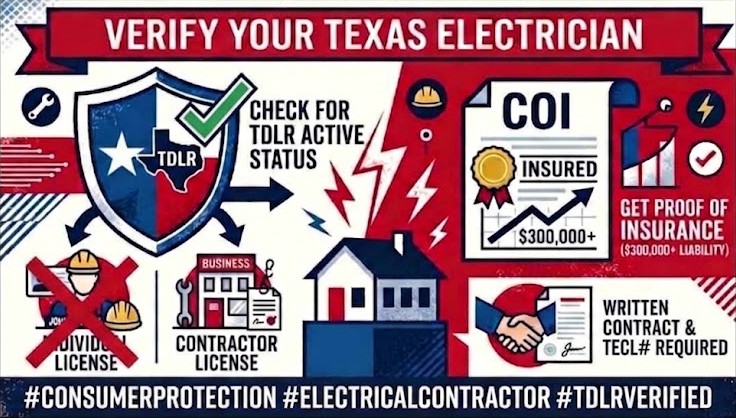
When you need an electrician for a renovation, fixing a faulty outlet, or upgrading your home’s electrical panel, finding the right electrician requires a little research to ensure safety and accountability.
In Texas, electrical work is strictly regulated to prevent fire hazards and ensure compliance with the National Electrical Code. Hiring an under-licensed, unlicensed or uninsured electrician isn’t just a financial risk; it’s a potential safety hazard for your family and your property’s integrity.
Protecting your home and family starts with a few minutes of due diligence. Here is what you need to research to ensure your electrician is operating legally and is properly insured in the state of Texas.
1. The Regulatory Source: TDLR
In Texas, all electrical licensing and regulation are handled by the Texas Department of Licensing and Regulation (TDLR). There is no such thing as an “unlicensed” person who is legally allowed to perform electrical work, they must be registered with the state.
Your primary tool for verification is https://www.tdlr.texas.gov/LicenseSearch/ This official, free portal allows you to search for both individual electricians and electrical companies by name or license number.
2. Verify the License Holder, Number, Type and Status
When you use the TDLR tool you aren’t just looking for a name; you are looking for the license type and an “Active” status.
What is the difference between a Business vs. Individual: Understand the distinction. Only an Electrical Contractor can solicit for electrical work. An Electrical Contractor license (TECL#) is for the business entity itself. This is the entity that hires electricians and holds insurance. The electrician hired by the electrical Contractor only holds an individual license which is not adequate to work independently—typically they are a Master Electrician (ME#) or a Journeyman Electrician (JE#). An Apprentice (AE#) may also perform work, but they must always be supervised by a licensed Master or Journeyman. Master, Journeyman and Apprentice electricians cannot legally solicit work. They cannot legally perform work independently outside of employment of an electrical contractor. If a master, journeyman or apprentice electrician says they can work outside of a company, they are doing so illegally. The illegal work may sound good and cheap, but it comes with serious risks to you. Risks like subpar quality, code violations, cut corners, inferior parts/materials and no insurance to make a claim on if something catastrophic occurs. Don’t become a victim: Only hire an Electrical Contractor!
What To Search: Enter the license number, company name or the individual’s name into the TDLR database. If they cannot provide you with a license number, or if the search returns no results, that is an immediate red flag. Also, if an individual electrician tells you he works for a company, ask for the company name and TECL#. Don’t take his word that he is employed there. Instead call the company and verify yourself. Unscrupulous individuals have been known to falsify employment and company ownership!
3. Don’t Skip the Insurance Verification
Even if a company is licensed, you must verify they are insured. In Texas, the state mandates that all Electrical Contractors maintain business liability insurance to remain licensed. This ensures that if a fire, injury, or major property damage occurs due to their work, there is a financial safety net for you.
The legal minimum for this general liability insurance is typically $300,000 per occurrence.
How to verify:
• Ask for the Certificate of Insurance (COI): A professional, reputable electrical contractor will not be offended when you ask for proof of insurance. They will be able to provide a current Certificate of Insurance easily. If a contractor says they are insured but refuses to give you their certificate, assume they are not insured and don’t do business with them.
• Call the agency: Documents can be falsified. It is in your best interest to call the agency to verify the policy is valid and current.
4. Red Flags to Watch For
When you are doing your research, watch for these common warning signs that suggest an electrician might not be legitimate:
• The “Cash-Only” Deal: Unlicensed operators often request payment in cash to avoid a paper trail.
• No Contract or Written Estimate: Professional work should always be documented with a clear scope of work.
• Refusal to Permit: Only an Electrical Contractor can pull permits. Some types of electrical work within a city jurisdiction require a permit from the local municipality. If an electrician says “you don’t need a permit for this,” they are likely trying to avoid the inspection process that ensures the work was done safely and to code standards because they cannot pull the permit.
By taking some time upfront to check the license and verify insurance, you ensure the critical basics are met in verifying a professional is accountable for their work. It is a small step that brings massive peace of mind to your electrical project.